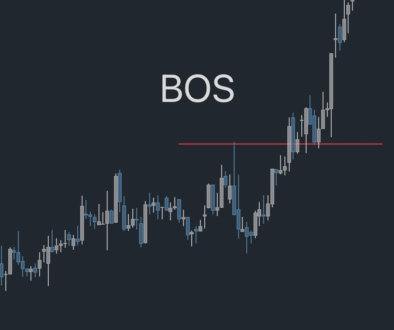
Balanced Price Range
Finding the Sweet Spot: A Trader’s Guide to the Balanced Price Range
If two opposite Fair Value Gaps (FVGs) overlap — for example, when a bullish FVG and a bearish FVG intersect in the same zone — many traders consider that overlapping area to be a Balanced Price Range (BPR).
Why? Because this overlap captures the essence of market balance: buyers tried to dominate, sellers pushed back, and the result is a zone where both sides have left their footprints. Price often returns to this area in the future, making it an important level for traders.
But what exactly is a Balanced Price Range, and why does it matter? Let’s break it down.
What is a Balanced Price Range?
If you’ve ever watched a stock chart and felt like you were just seeing random noise, you’re not alone. The market is a constant tug-of-war between buyers and sellers. But within that chaos, there are moments of beautiful equilibrium—periods where the market pauses, digests recent moves, and establishes temporary balance.
This is the Balanced Price Range (BPR).
-
In simple terms, it’s a zone of consolidation where supply and demand are roughly equal.
-
On a chart, it often appears as a sideways box, with a clear top (resistance) and bottom (support).
-
It may also form when two opposite FVGs overlap, signaling that both bullish and bearish imbalances have been corrected into balance.
Think of it like a tug-of-war where both teams are equally strong. The rope wiggles, but no team can pull the other across the line.
Why BPR Matters for Traders
-
Strong Support/Resistance: BPRs often act as key levels when price revisits them.
-
Better Entries: Waiting for price to return to a BPR can reduce risk and improve timing.
-
Clearer Market Structure: Recognizing balance versus imbalance helps you understand whether the market is consolidating or trending.
How to Spot a BPR
-
Look for Consolidation: After a strong move, price pauses and forms a tight range.
-
Check for Overlapping FVGs: If bullish and bearish FVGs intersect, the overlap is a BPR.
-
Draw a Box: Mark the upper and lower boundaries of the balanced zone to watch for future reactions.
Trading with BPR
-
In an Uptrend: If price breaks higher, then comes back to a BPR, many traders look for buying opportunities.
-
In a Downtrend: If price breaks lower and revisits a BPR, it may offer a selling setup.
-
Risk Management: Stop-losses are often placed just outside the BPR box.
Trader’s Tips for Using BPRs
-
Mark them with a rectangle on your chart for easy visibility.
-
Check higher timeframes first (daily/weekly) for stronger BPRs.
-
Combine them with other tools (liquidity zones, FVGs, or order blocks) for confirmation.
-
Be patient — BPRs are best used as reaction zones, not as standalone signals.
Final Thoughts
The Balanced Price Range (BPR) is more than just a box on a chart — it’s the market’s way of showing balance after chaos. Whether it forms from consolidation or overlapping FVGs, a BPR marks a zone where buyers and sellers agreed on fair value, even if only temporarily.
By learning to spot and trade around these areas, you can gain an edge in timing entries, setting stops, and reading the underlying market structure with confidence.